AEO vs. GEO vs. SEO: What Trade Business Owners Actually Need to Focus On
New acronyms are being pitched as entirely new disciplines. They're not. Being clear about what they actually mean will save you from spending money in the wrong places.
If you've spent any time reading about digital marketing lately, you've probably come across two new acronyms — AEO and GEO — being treated as if they're entirely new disciplines that require entirely new strategies. They're not. And being clear about what they actually mean — and what they don't — will save you from spending money in the wrong places.
SEO: The Foundation That Has Not Gone Anywhere
Search Engine Optimization. You know this one. At its core, SEO is the practice of making your business visible when people search for what you do. It encompasses your website's technical health, the content on your pages, the authority signals you've built through reviews and external links, and how your business information is structured and distributed across the web.
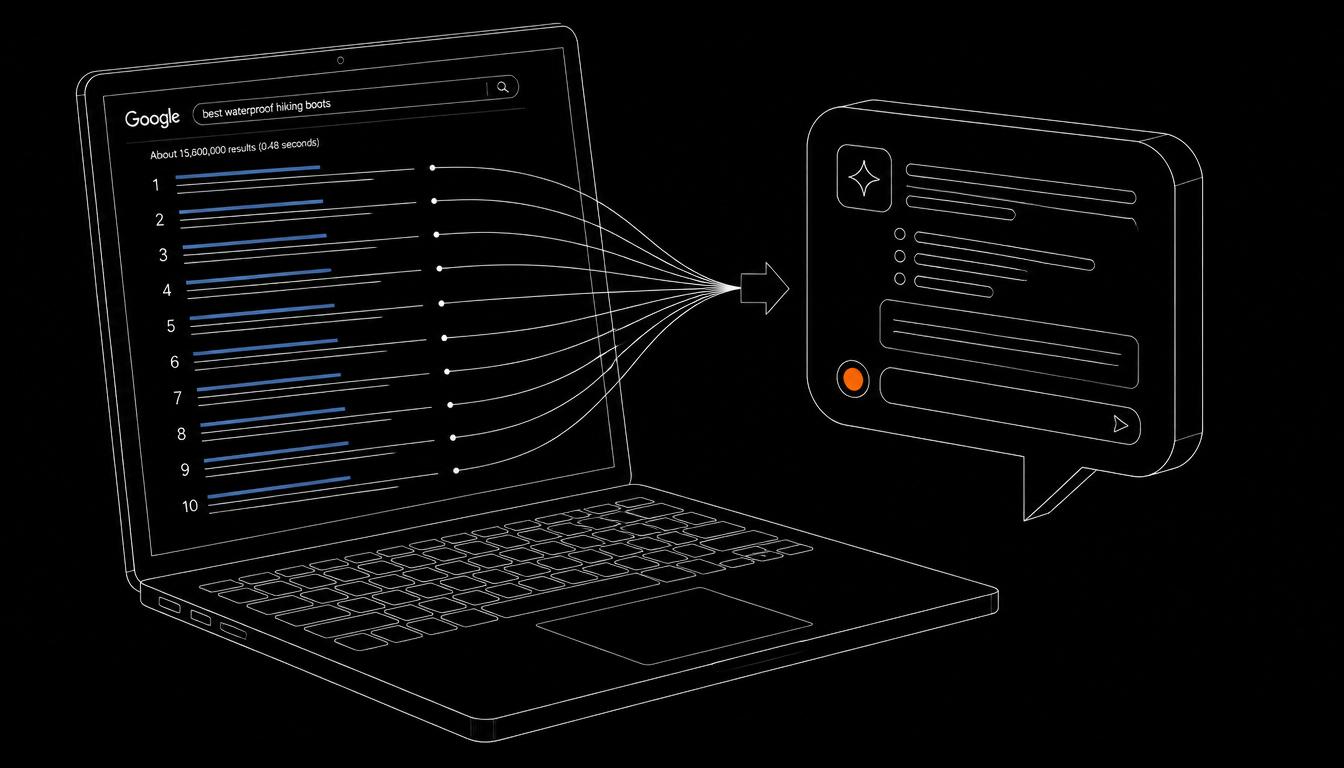
The old version of SEO was heavily focused on keyword ranking — put the right words on the right pages, earn enough backlinks, and your pages climb the results list. That version of SEO is declining in importance, not because SEO itself is dead, but because the results list it was optimizing for is being replaced by AI-generated answers.
But here's the critical point: the underlying foundations of good SEO — a technically sound website, quality content that demonstrates expertise, consistent business information, strong reviews — are exactly what AI search requires. They haven't become irrelevant. They've become more important, and the standard for executing them has risen.
AEO: Answer Engine Optimization
AEO stands for Answer Engine Optimization. An 'answer engine' is exactly what it sounds like: a system that returns a direct answer to a question rather than a list of links. AI Mode is an answer engine. So is Siri, Alexa, and Google's voice search.
For a trade business, AEO primarily means structuring your content around questions, not just keywords. Instead of writing a service page about 'HVAC maintenance services,' you write content that directly answers the questions homeowners are asking. Using FAQ schema markup that explicitly marks up your questions and answers in a format answer engines can read and cite directly. And writing with direct, specific answers that get to the point.
The honest reality: AEO is not a separate discipline from SEO. It's SEO applied to the specific surface of AI-generated answers. The underlying work is the same — expertise content, structured data, clear business information.
GEO: Generative Engine Optimization
GEO stands for Generative Engine Optimization. A 'generative engine' is an AI system that generates its own content in response to a query — rather than just retrieving and ranking existing content. Google's AI Mode, ChatGPT, Perplexity, and similar tools are generative engines.
For trade businesses, GEO primarily means being a recognizable, credible entity in the sources AI models draw from. Producing content that generative engines find worth citing — not generic content the AI can produce itself, but content that documents your specific expertise, your real jobs, your local knowledge. And maintaining presence on the platforms these engines index.
Again, the honest reality: GEO is not a separate strategy from SEO or AEO. It is the same underlying work — expert content, consistent digital presence, quality reviews, structured data — applied to the surface of generative AI recommendation.
What Google Actually Said About This
There is no separate strategy for AI search. AEO and GEO are foundational SEO applied to an AI surface.
This is not hedging. This is Google explicitly telling businesses and marketers that the companies selling 'AI search strategies' as entirely new disciplines are overcomplicating it. The core work is the same. What's changed is the depth of execution required, the specific technical elements that have become non-optional, and the type of content that earns citation versus the type that gets ignored.
What Trade Business Owners Should Actually Focus On
If you strip away the acronym confusion, here is where a trade business's attention and investment should go in 2026:
- Build a website that demonstrates genuine expertise — service pages with real depth, real photos, real process descriptions. Not a brochure. A trust system.
- Generate reviews that are specific — not just numerous. Coach your customers on what kind of feedback is useful. Job details, technician names, service areas.
- Keep your Google Business Profile current and complete — not just set up. Updated regularly, Q&A populated, posts published, reviews responded to.
- Implement schema markup correctly — LocalBusiness, Service, FAQ, AggregateRating at minimum. This is the technical layer that makes everything else machine-readable.
- Maintain consistent business information everywhere — same name, address, phone, same business description, across every platform where you appear.
- Produce expert content quarterly — not blog volume. Real documentation of real work. The kind of content only your business can create.
Do these things consistently, and you are doing SEO, AEO, and GEO simultaneously — because they are, at their core, the same work.
Get a Clear Picture of Where Your Digital Presence Stands
Not sure how your current execution stacks up? Our free competitive audit evaluates your digital presence against your top local competitors across every one of these dimensions.
No pitch. No commitment. A real, 15-minute video teardown of your site.